“Da Subject Matter” Website
Planned Parenthood
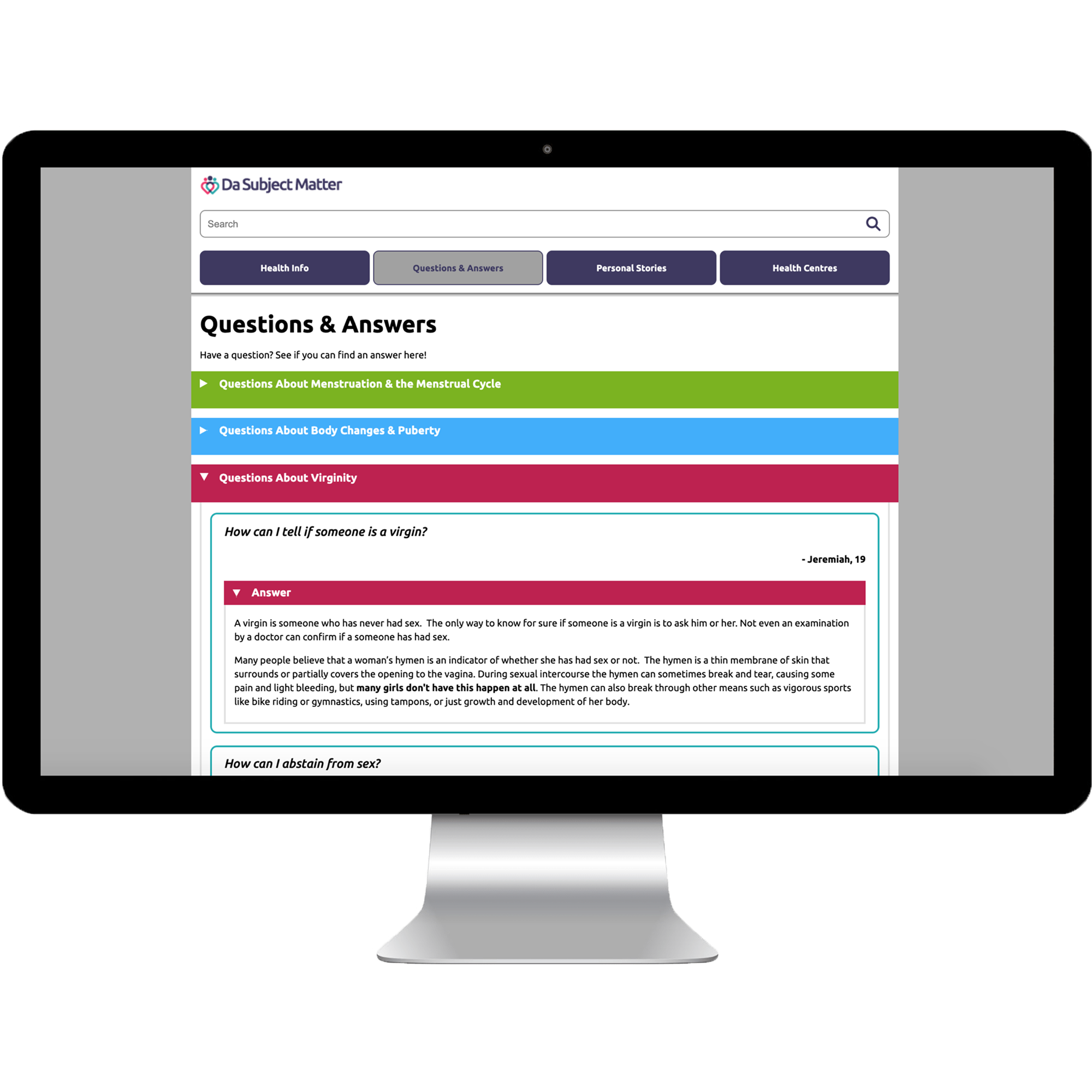
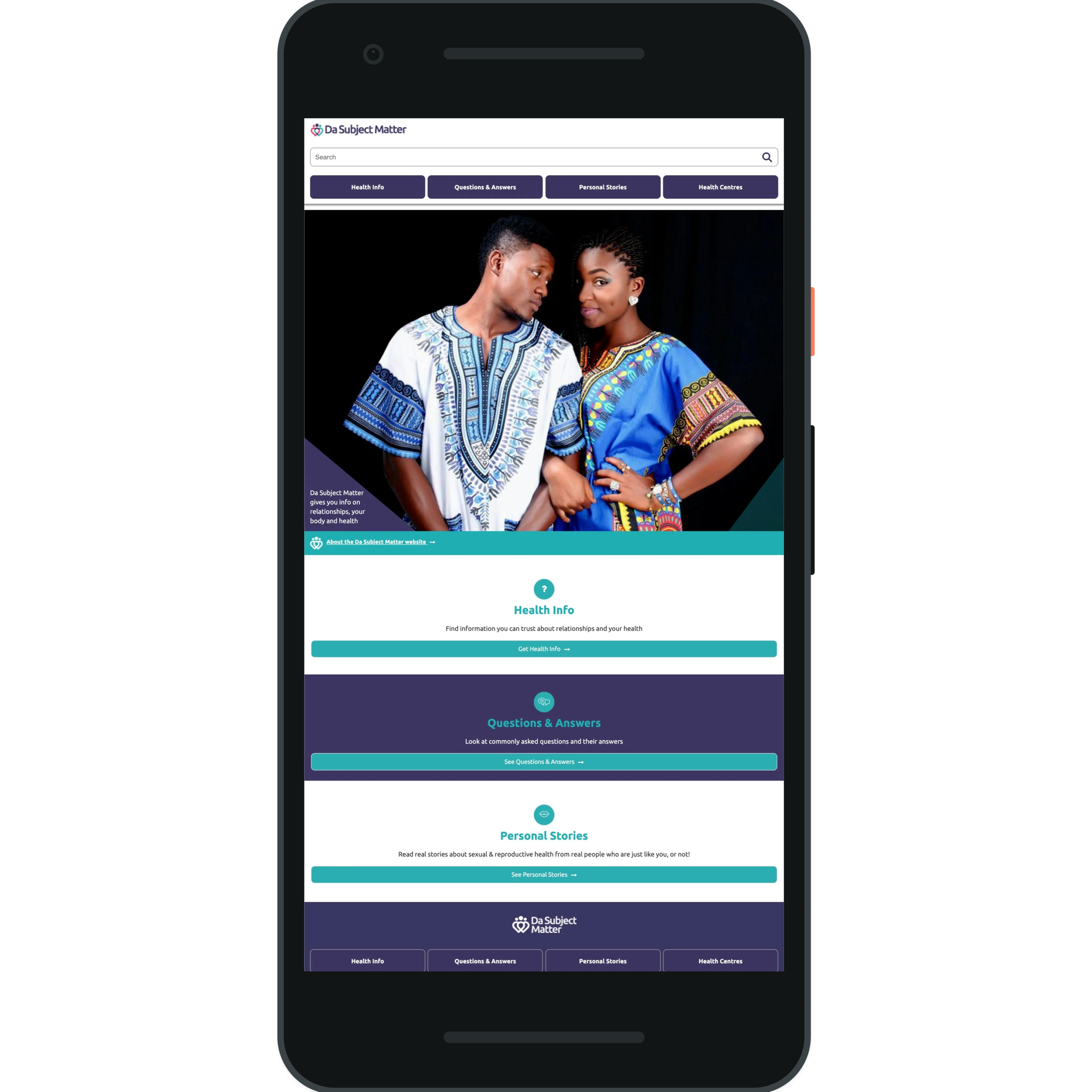
Opportunity: Planned Parenthood site analytics showed a significant amount of mobile traffic from countries Africa. These users were searching for healthcare information and health clinics. In response, Planned Parenthood launched ‘Da Subject Matter’ as a pilot program in Nigeria with the goals of delivering trusted, culturally-relevant healthcare information and connecting users to verified health centers close to them.
Project Impact: As of 2020, ‘Da Subject Matter’ was accessed by over 1 million Nigerian adolescents since launching in 2016 and fielded more than 1,000 user-submitted questions per month.
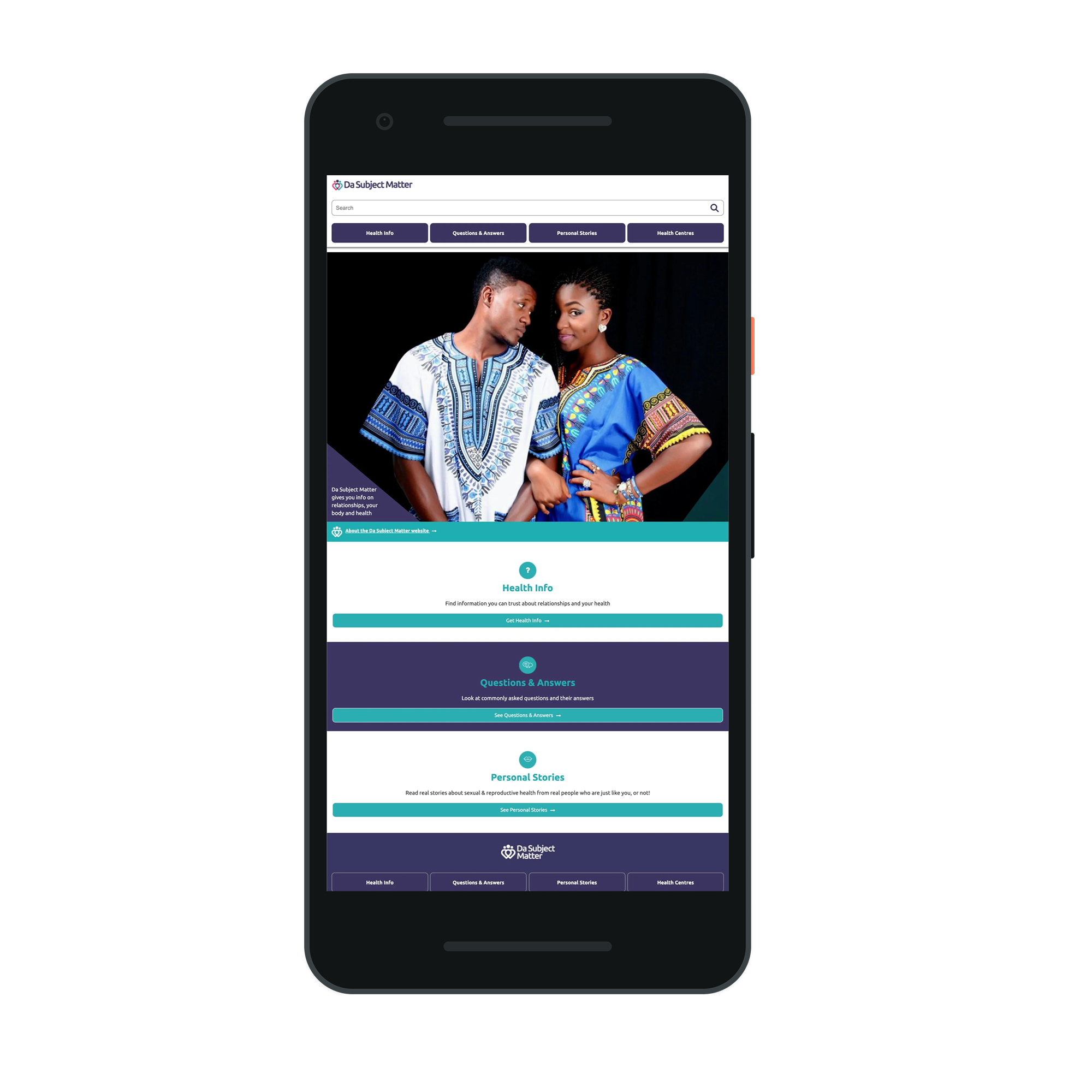
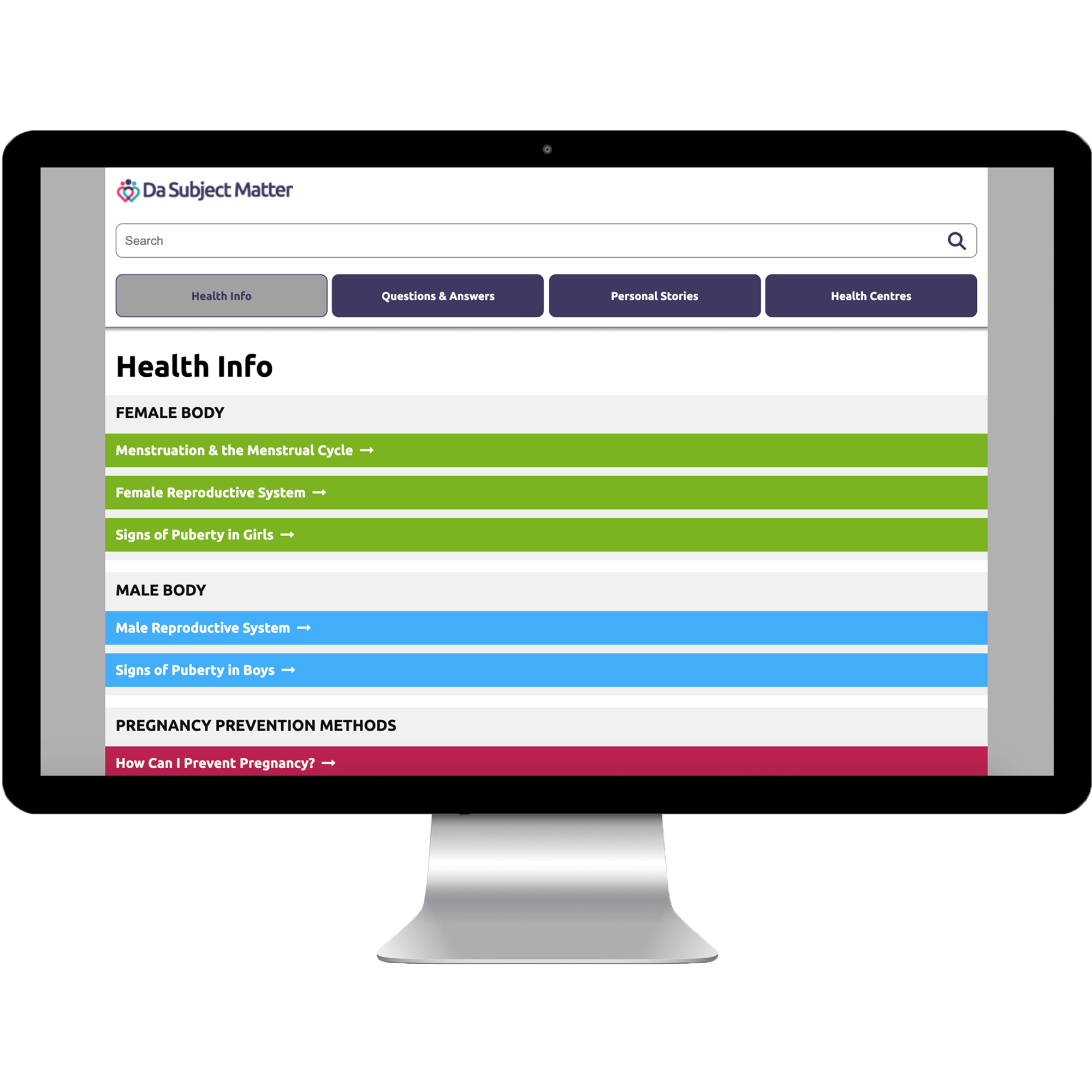
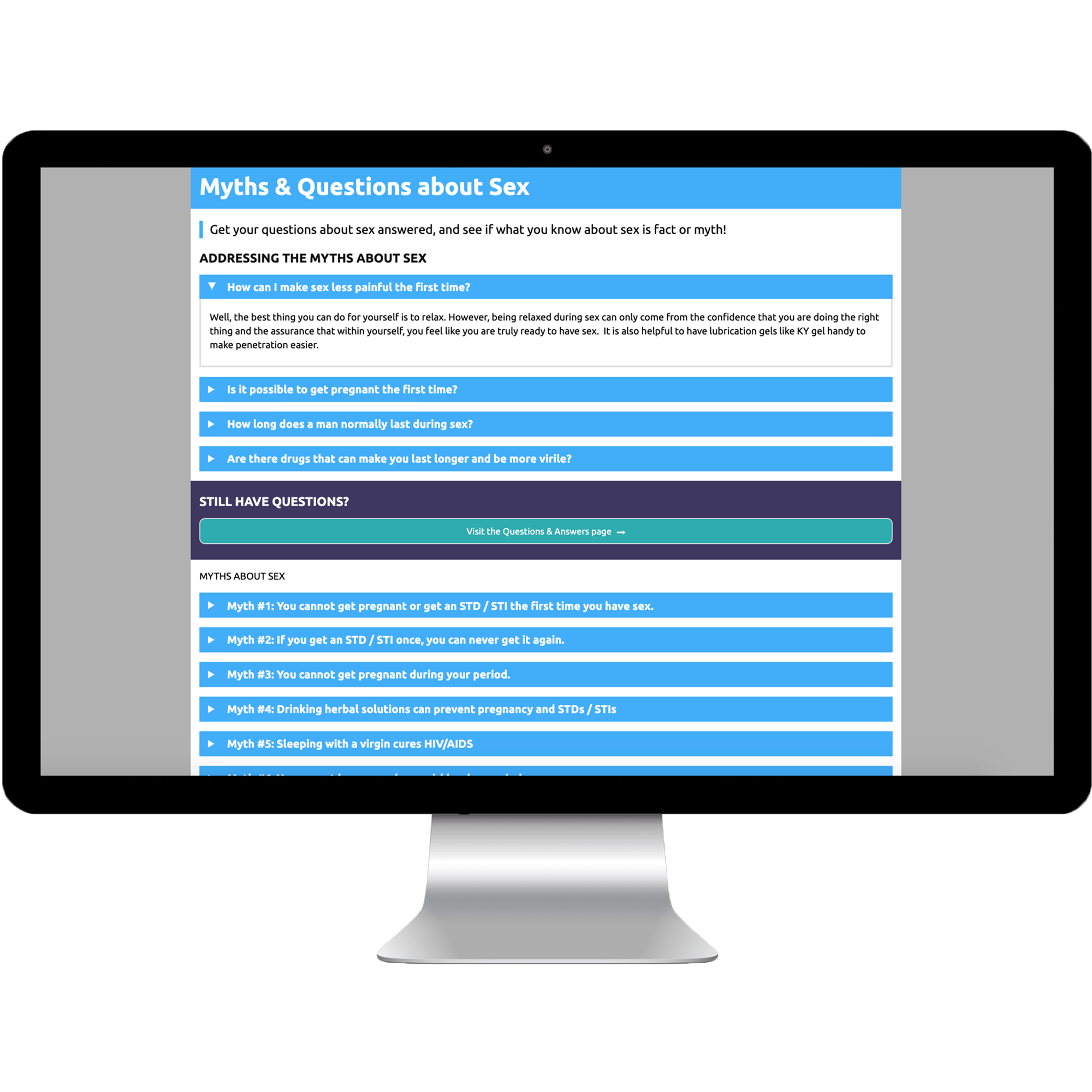
‘Da Subject Matter’ is a mobile-first website developed in partnership between Planned Parenthood and the United Nations Population Fund to make sexual and reproductive health information and services available to youth around the world via mobile technology. Since the majority of adolescents in Nigeria only have access to mobile devices, the website was designed to load lightly and utilizes mobile layouts. ‘Da Subject Matter’ directs users to health services in their area and provides straightforward, culturally-responsive information on a wide-range of health and reproductive care topics.
My Role: UX Research Lead, Content Strategy, Backlog Prioritization
Team: Jenny Friedler (Sr Director Digital Product), Chelsey Delaney (UX Lead and Designer), Kate Hesel (Global Health Program Lead), Jennifer Johnsen (Director of Health Information)
project highlights

User Research and Analysis
Due to the inherent difficulties of testing with an audience that has low access to the Internet, the majority of user testing took place in-person, over the course of two week-long research trips to Nigeria. I designed and moderated usability tests, focus groups, surveys, card sorts, and tree tests, as well as managed a series of iterative tests with our US-based design team so we were able to quickly and effectively test and validate as many designs as possible with our Nigerian user base.
Mobile-First Site and Accessibility
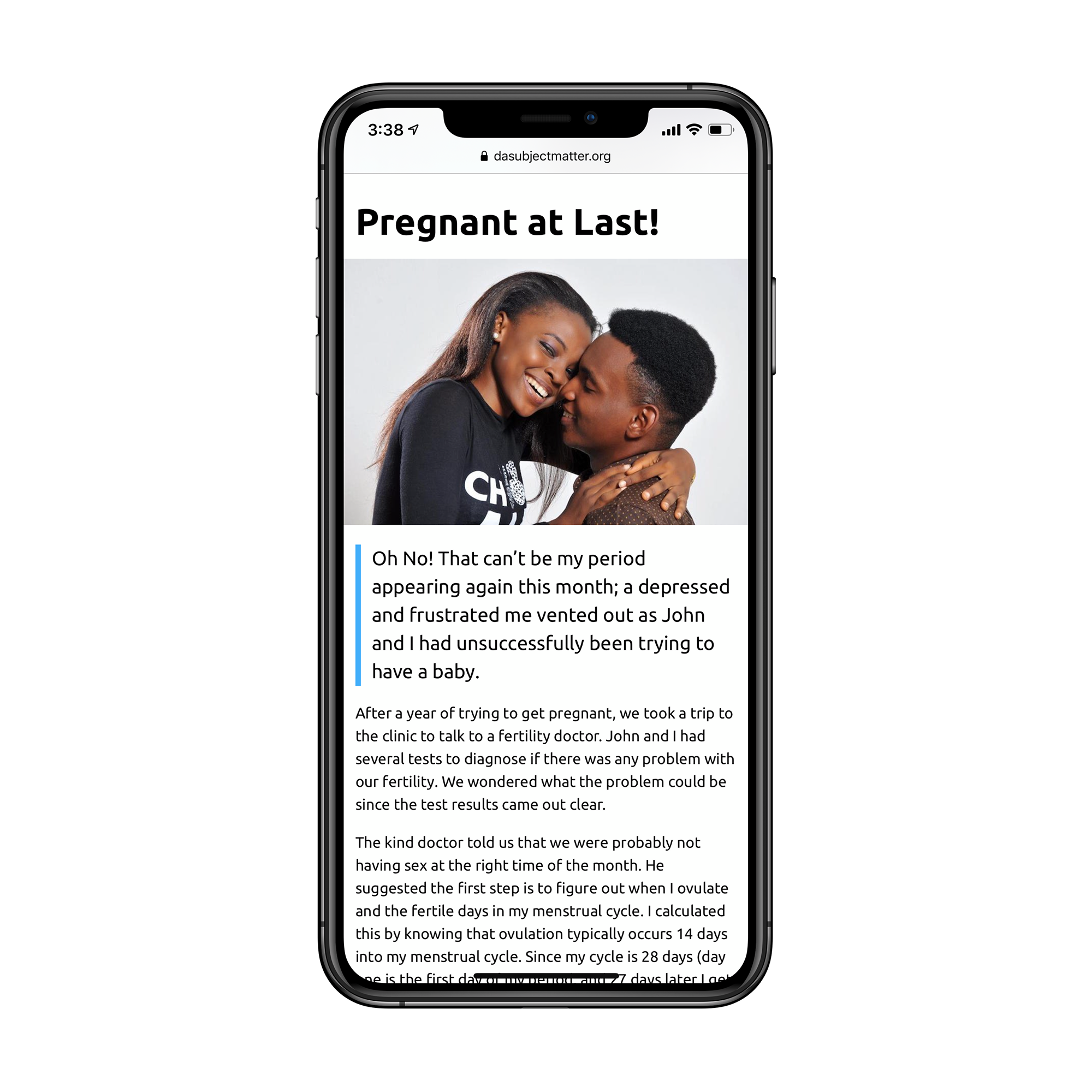
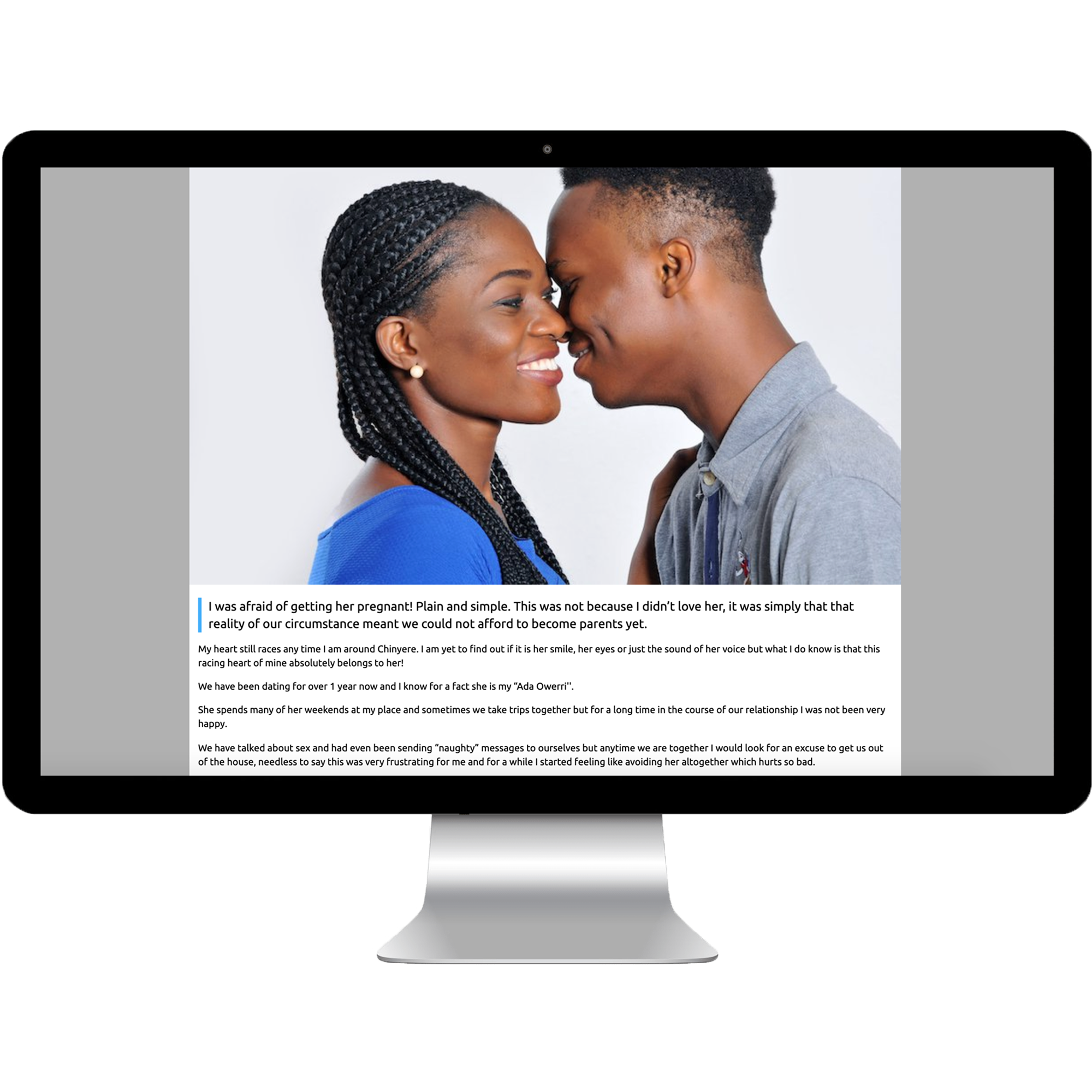
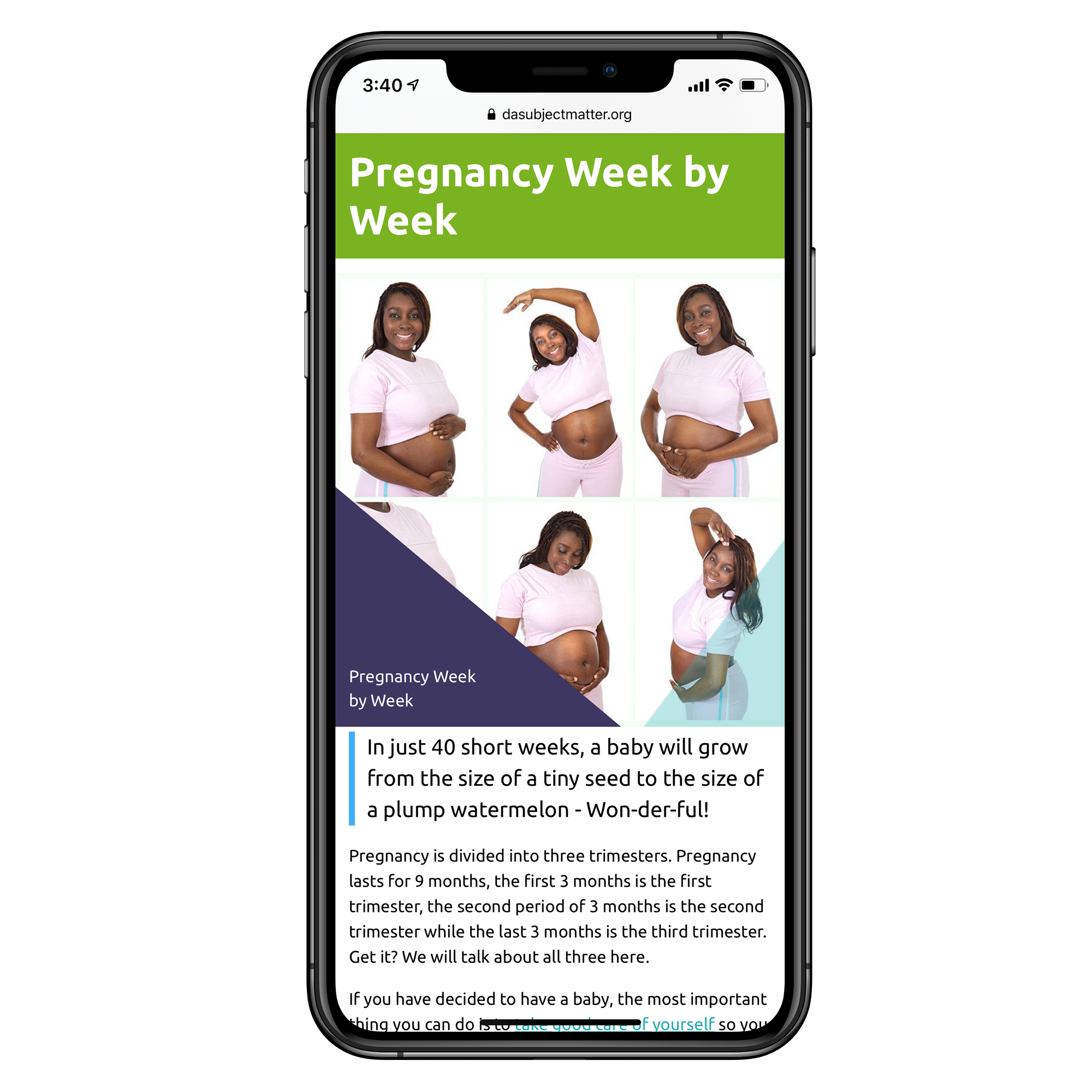
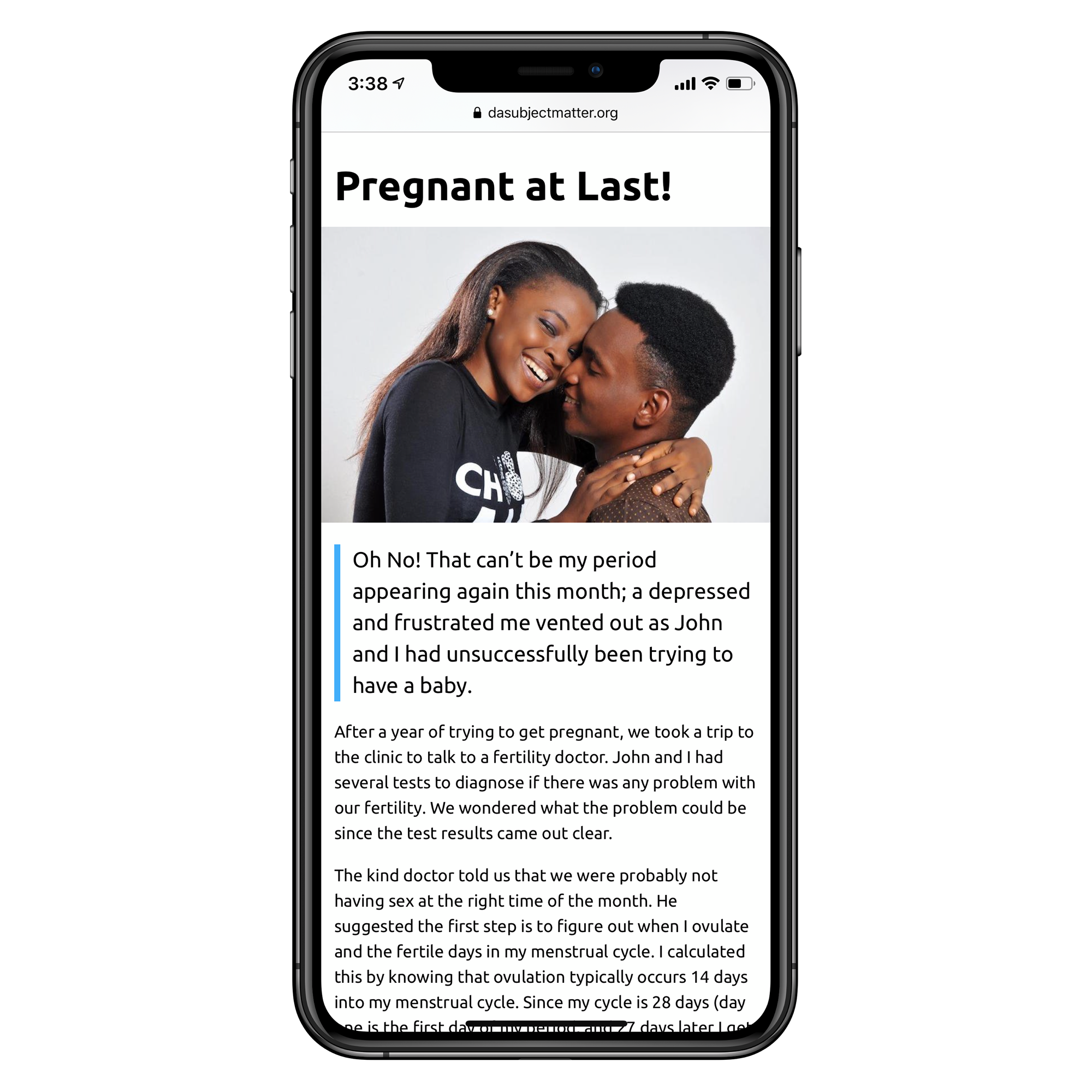
In ‘Da Subject Matter’ accessibility meant both in terms of technology and content strategy. One of the most difficult parts of this project was ensuring that the website was able to load quickly on the devices that users had access to because it means nothing if users can’t reach the information. Since most youth had access to a mobile device the site was developed mobile-first and without many images to help with poor Internet and cellular connectivity. From a content perspective, we worked with local partners to translate slang and ethnocentric terminology to ensure users could understand the content; we also educated through personal stories as they resonated strongly with participants.
User Education
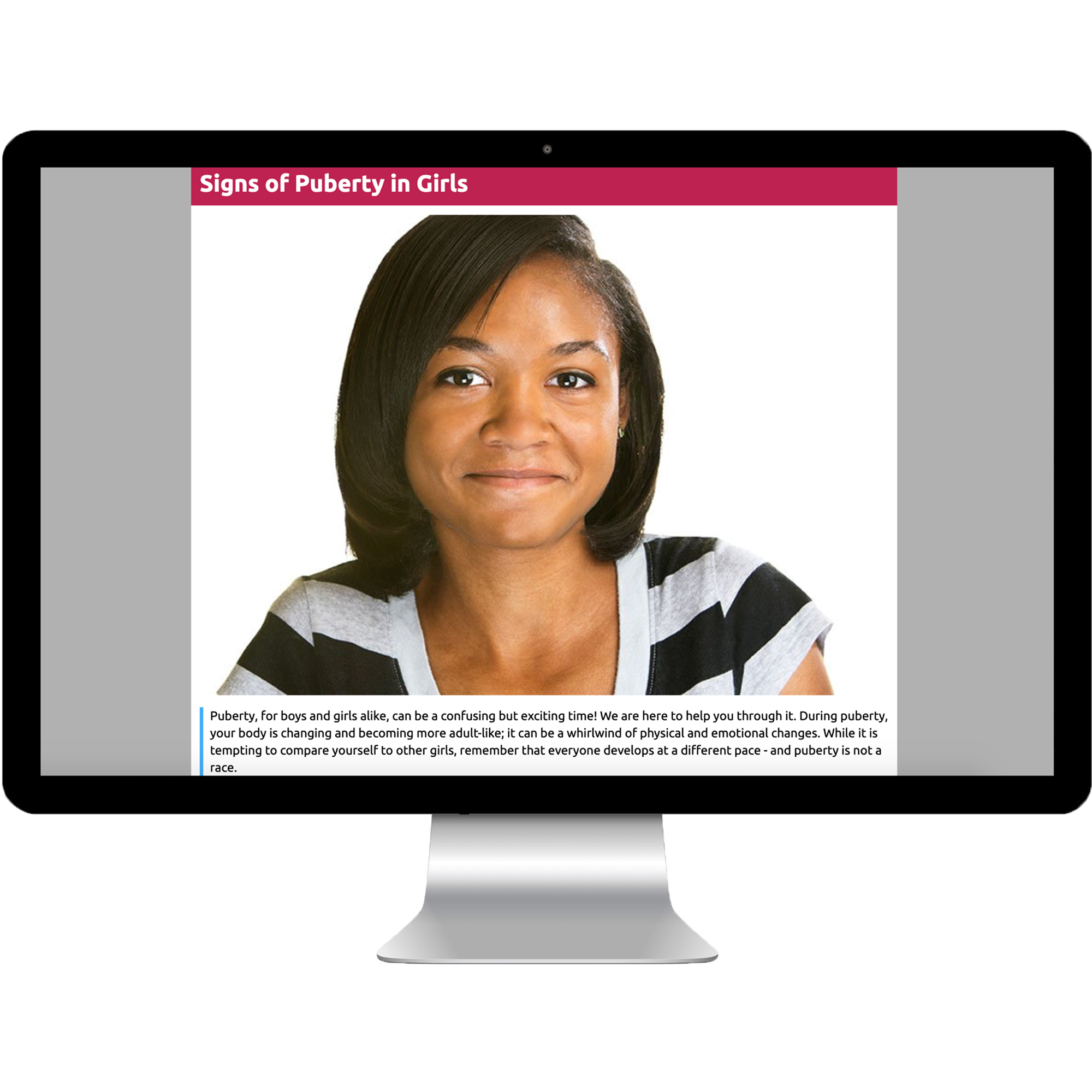
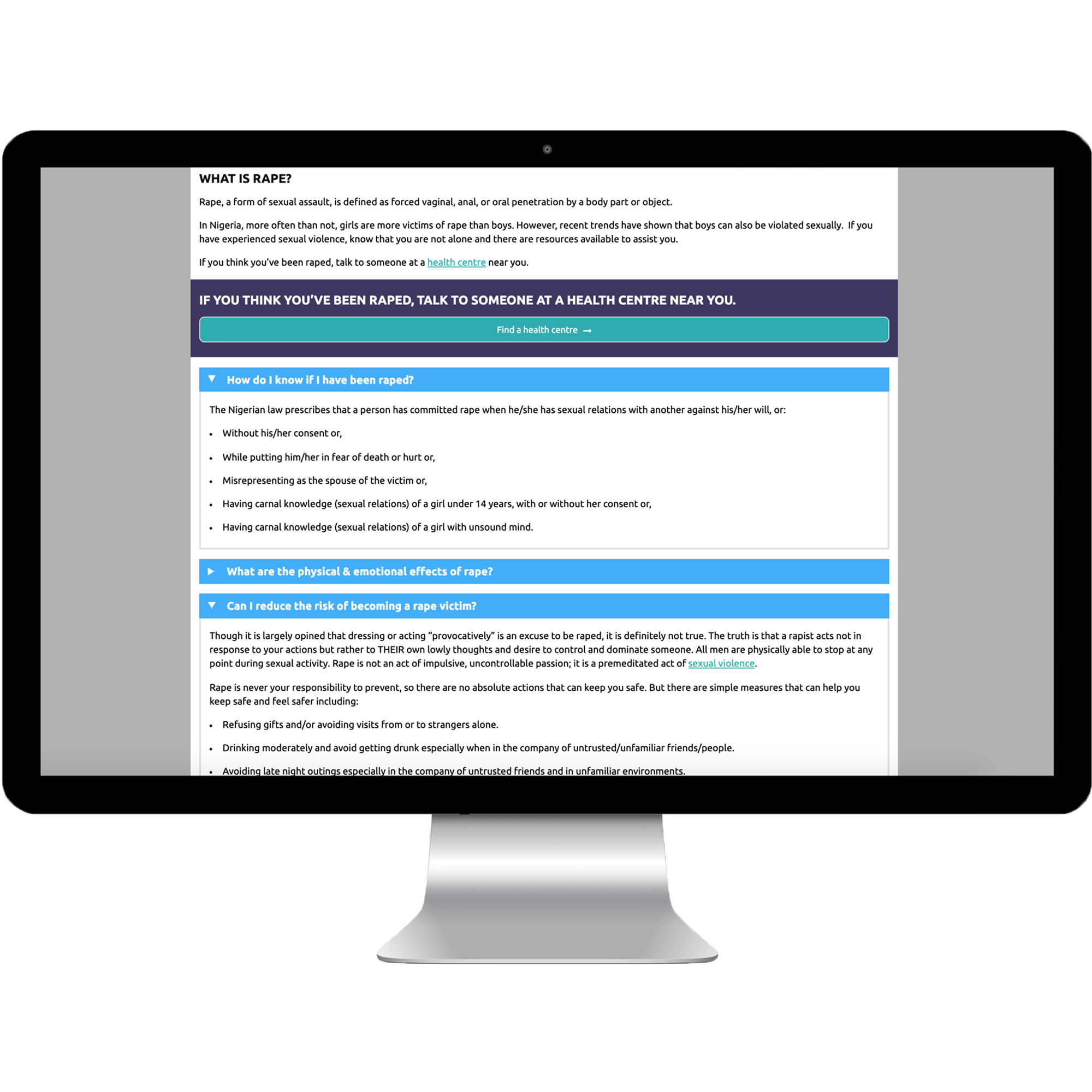
In Nigeria the heavy influence of the Catholic and Islam religions has resulted in a very conservative approach to sexual and reproductive healthcare and education. Through user testing we found that schools and parents were providing little information, or worse, shame-based misinformation. Our team identified the information gaps and misconceptions present and addressed them on ‘Da Subject Matter’. In subsequent 1:1 usability tests we saw that adolescents were able to navigate the website and find accurate, non-judgmental answers to questions they voiced. In one case, I observed a female participant read through the section on rape, I asked her what she learned. She responded, “I learned being raped is not my fault.”

Culturally Relevant
Ensuring ‘Da Subject Matter’ is culturally relevant for our target audience ensures that Planned Parenthood is able to deliver health information and services globally to under-served populations. Through user research we were able to understand how Nigerian cultural, religious, and societal norms impacted how the adolescents approached topics such as puberty, sex, and reproductive healthcare. Most importantly, we were able to understand how Nigerian teens spoke about these different health topics, what questions they had, what terminology they used, and what misconceptions they harbored.